
Menu
Record Temperatures of Europe Heatwave 2026
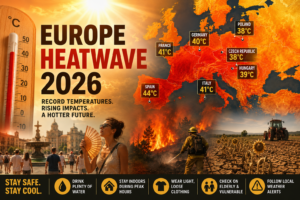
Europe heatwave 2026 has become one of the most significant climate events of the year, affecting millions of people across the continent. Countries that are usually known for moderate summer temperatures are experiencing extreme heat, with some areas recording temperatures above 40°C. The severe weather has disrupted daily life, increased pressure on healthcare systems, raised wildfire risks, and highlighted the growing need for climate resilience.
Why Is Europe Experiencing Extreme Heat?
The current heat has spread across France, Germany, Spain, Italy, Poland, Hungary, and the Czech Republic. National weather agencies have issued heat alerts, advising residents to stay indoors during peak afternoon hours, drink plenty of water, and avoid unnecessary outdoor activities.
Meteorologists explain that the Europe heatwave 2026 is caused by a persistent high-pressure system trapping hot air over much of the continent. Dry soil conditions and rising global temperatures have intensified the situation, creating extremely hot days and unusually warm nights.
Health Risks During the Heatwave
One of the biggest concerns is the impact on public health. Hospitals have reported increased cases of dehydration, heat exhaustion, and heatstroke. Medical professionals recommend drinking plenty of water, wearing lightweight clothing, and limiting outdoor activities during the hottest parts of the day.
Older adults, children, and people with existing medical conditions remain the most vulnerable. Local authorities continue to conduct welfare checks and provide emergency support to protect high-risk communities.
Agriculture and Food Supply Challenges
The agriculture sector has been severely affected by prolonged high temperatures and reduced rainfall. Farmers are reporting lower yields of wheat, corn, vegetables, and fruits due to drought-like conditions. Livestock producers are also experiencing reduced productivity as animals suffer from heat stress.
Water shortages continue to increase as irrigation demands rise while rivers and reservoirs experience declining water levels. Experts believe that sustainable farming practices and better water management will play an important role in future climate adaptation.
Energy Demand and Infrastructure
The Europe heatwave 2026 has caused electricity demand to surge as households and businesses rely heavily on air conditioning. Energy providers have warned of increased pressure on power grids, while authorities encourage residents to conserve electricity whenever possible.
Transportation systems have also been affected. Rail operators are monitoring tracks for heat expansion, roads require additional maintenance, and airports have adjusted operations to maintain passenger safety during extreme temperatures.
Wildfires and Environmental Concerns
Wildfire risks have increased significantly across southern and central Europe. Dry vegetation and persistent heat have created ideal conditions for fires to spread quickly. Emergency services remain on high alert, while governments have restricted outdoor burning and other activities that could trigger fires.
Environmental experts warn that repeated periods of extreme heat place long-term stress on forests, rivers, biodiversity, and wildlife habitats, making conservation efforts increasingly important.
Tourism and Daily Life
Tourism has also been impacted as visitors adjust sightseeing schedules to avoid the hottest hours of the day. Many tourist attractions now offer shaded rest areas, free drinking water stations, and revised operating hours to improve visitor safety.
Hotels, restaurants, and local businesses have extended evening services, encouraging travelers to explore destinations during cooler morning and nighttime hours.
Climate Change and Future Summers
Scientists continue to link the Europe heatwave 2026 to long-term climate change. Although natural weather patterns influence seasonal temperatures, global warming has significantly increased the frequency and intensity of extreme heat events across Europe.
Governments are investing in climate adaptation strategies, including expanding green spaces, improving building insulation, developing heat-resistant infrastructure, and strengthening emergency response systems.
Government Response and Safety Measures
Authorities across Europe have established cooling centers, increased emergency medical services, and continued issuing weather warnings to protect public health. Citizens are encouraged to stay hydrated, avoid direct sunlight during peak hours, wear light-colored clothing, and check regularly on elderly relatives and neighbors.
Long-term planning now focuses on sustainable urban development, disaster preparedness, and climate resilience to reduce the impact of future heat events.
Conclusion
The Europe heatwave 2026 highlights how extreme weather is becoming more common as global temperatures continue to rise. Beyond breaking temperature records, this event emphasizes the importance of protecting vulnerable communities, strengthening healthcare systems, improving infrastructure, and investing in sustainable environmental solutions. Through cooperation between governments, scientists, businesses, and citizens, Europe can become better prepared for future climate challenges.

Ukraine Drone Attacks on Russia: Latest Escalation in the Ongoing Conflict
March 26, 2026
No Comments
Read More »

Understanding Islamophobia: Causes, Effects, and Ways to Combat It
March 26, 2026
No Comments
Read More »